Categories
News

We Support Justice for Antwon Rose

Screen Shot 2019-03-19 at 12.46.25 PM
Antwon Rose II pictured above wearing a white t-shirt with trees and sun in the backgroundWe are all witnesses.

We are all witnesses.

On June 19, 2018, we watched the video of 17-year-old Antwon Rose II running away, unarmed, with his hands held high. We watched as he was shot three times in the back by Police Officer Michael Rosfeld.

Antwon Rose II was no threat to Michael Rosfeld.

We believe the family and loved ones of Antwon Rose II deserve justice.We believe that in a democratic society, democracy fails when any citizen is denied a pathway to justice.

We believe that holding police accountable is essential for creating a meaningful relationship between the police and the community.

We believe that in order for justice to prevail, Michael Rosfeld must be prosecuted to the fullest extent of the law for the murder of Antwon Rose II.

We believe that if the Allegheny County District Attorney convicts Officer Michael Rosfeld, then we can finally begin the process of healing and reconciliation.

The focus should be on convicting Michael Rosfeld, not what a community in pain might or might not do.

We’ve all heard the slogan that Pittsburgh is “America’s Most Liveable City.” However, without justice, without accountability, without racial equality, the question remains, “For WHOM?” Only a two-tier system of justice that offers police preferential treatment would accept the notion that Michael Rosfeld is innocent of wrongdoing. Such a conclusion would send a very clear message to our community and the world that Black Lives Do NOT Matter.

The outcome of this trial can either deepen the division or show that we are truly “Stronger Together”.

The whole world is watching.

Sincerely,

Concerned Citizens of Allegheny County

120 Organizations signed onto this open letter initiated by the Alliance for Police Accountability and 1HOOD

To find out how you can support the family email justiceforantwonroseII@gmail.com. You can Cash App donations to: $ANTWONSMOTHER .

Categories
News

New Years News

Let’s Get Free is pushing off the new year with a flurry of heartfelt activity. Excitement is brewing because we have secured a date for our annual prison justice art fundraiser (October) and our dear friends from Philadelphia are coming to lead a training on self governance. That’s right! Reconstruction Inc. will be here the 3rd weekend of March to share their Capacity Building Curriculum, and you are invited!

We continue to confront laws and policies upholding Death by Incarceration sentences, with our participation in CADBI-West. We have been channeling love in the form of visits, letters, phone calls, books, financial and commutation application support to not just the women at Cambridge Springs but many people serving life sentences.

We are bursting with ideas and an overwhelming workload – perhaps you are ready to get more involved? Next meeting this Wednesday Feb 20th @ 6:30pm at the TMC Annex 5119 Penn ave! You coming?

Read on dear ones for news, updates and ways to participate.


Support Pittsburgh’s New Bail Fund!
The Bukit Bail Fund of Pittsburgh is doing its first set of BAILOUTS over the week of Valentine’s Day!

To celebrate this righteous return of people to their communities, you are invited to join on February 14, 2019 for a celebration of love and freedom with dinner, conversation, performances by radical artists, and more!

This secret café pop-up restaurant will begin serving dinner at 6:45, with a short menu made to satisfying all (vegans/carnivores/gf/nut free)

There is no cost for this event, though donation jars will be present for those who feel called to contribute.

~Why do we need a community bail fund in Pittsburgh?~

81% of inmates at ACJ have not been convicted of a crime. They are only being held because they cannot afford to post bail before their trial. Their freedom cannot wait. Black people and other People of Color end up behind bars more than anyone else — Black people get incarcerated at more than five times the rate of white people. People needlessly suffer and often even die in jail while waiting on their hearings, especially if they are POC, trans, disabled, or poor. In 2017, four people died at ACJ due to medical neglect, and historically such deaths occur within the first few days of someone’s arrival.

Join this new exciting group on this day of action in memory of Frank “Bukit” Smart, Jr. and everyone else who has lost their life to the neglect and active abuse of the ACJ. In solidarity with all their families, friends, and loved ones, let’s spread the #LoveBeyondBars!

For more info on Bukit’s story, please visit the Facebook page: Bukit Bail Fund


Call for Artists

Our 3rd annual prison justice art fundraiser is set for October of 2019. Calling all artists on both sides of the walls to create pieces on the theme –  “Glow Home:
Illuminating relationSHIPS

What does HOME look like? Feel like? A space? A state of mind? how do you glow there?

How would you draw, paint sculpt your dream home? If you are incarcerated, what are your hopes, dreams, fears about coming home?

So many of us had fun creating lamps and light boxes at last years show we wanted to extend that theme. Spruce up a lamp shade or string of lights.

Another angle is that of relationSHIPS. We believe relationships are really what makes coming home GLOW. Think of all the ships:)  relationSHIP. friendSHIP, companionSHIP, hardSHIP, worSHIP, partnerSHIP, citizenSHIP, leaderSHIP -it is a fundraiser. People love ships. loveSHIPs.

Please submit your art by July 31 2019.

As always, we accept old art that wasn’t made specifically for this show. Additionally, if anyone is still inspired to make art out of letters from people in prison please do!

Do you know an incarcerated artist? Share their contact with us so we can send them the call to artists.

Questions, encouragement or need some letters from people in prison?  Contact etta cetera: letsgetfreepa@gmail.com – 443-603-6964


Capacity Building Curriculum
-a training for self governance and group sustainability-
March 23 & 24 (Saturday and Sunday)
Details to be decided: Save the Date!

Please join Reconstruction Inc. in collaboration with Let’s Get Free in a two day training & learning from the Capacity Building Curriculum.

Reconstruction Inc. is a grassroots organization based in Philadelphia whose purpose is to affect social change by forging individuals that were formerly incarcerated into an organized community of leaders working together to transform the criminal justice system, their communities and themselves. This curriculum has been developed over many years of direct implementation with groups in Philadelphia and recently at the State Correctional Institution-Muncy. It is important to note that the curriculum is not only for people impacted by the criminal injustice system, but for everyone.

Reconstruction Inc. believes that each human being is sacred and is valuable to themselves, their family, the community and to society. Each of us should be critical thinkers, good decision makers, and give principled leadership to our family and eventually change the world. This curriculum has three pillars, and is both interactive and transformative.


Ricky Olds founder of Let’s Get Free’s new program, The Real Deal on Reentry, spoke as a part of Law & Disorder panel at the Pittsburgh Racial Justice Summit on January 25, 2019. The Real Deal is a budding  program supporting returning citizens. The program is organically occurring on the streets of downtown Pittsburgh, on buses across the city and through the prison walls. Ricky has been offering emotional and financial support for fellow returning citizens as well as to his brothers on the inside. To learn more about Ricky’s story

Categories
News

News from Let’s Get Free

Upcoming Dates to Save:

October 2nd – People’s Senate Vote! Rally in Harrisburg 11:30 AM Rotunda (check in for details coming from Pittsburgh on http://cadbiwest.org or email cadbiwest@gmail.com
October 20th – CADBI New Member Launch – Details To be Announced
October 23rd – Avis Lee’s Hearing in Philadelphia – Many people in Pittsburgh will attend leaving both Monday night and Tuesday early morning.

Let’s Get Free is meeting regularly every other Wednesday at the Thomas Merton Center Annex. See sidebar for details or email letsgetfreepa@gmail.com

Oral Argument for Avis Lee – Tuesday-  October 23, 2018

The Pennsylvania Superior Court has scheduled en banc (meaning the full court, i.e. 9+ judges) oral argument in the case of Avis Lee for Tuesday, October 23rd at 9:30 a.m. at in Philadelphia, address: 17th Floor, 530 Walnut St. 

The Court is sitting “en banc”, which means 9 or more judges, and when they are en banc they have super judicial powers and can overturn their existing precedent that prohibits 18+ Miller claims.

The issue in this case is whether Avis is permitted to challenge her mandatory life-without-parole sentence as excessive in violation of the Eighth Amendment’s prohibition on cruel and unusual punishment due to her being only 18 years old at the time of the offense. Avis raised a claim that she had the same characteristics of youth and immaturity that the U.S. Supreme Court found relevant in striking down mandatory life-without-parole sentences for children younger than age 18 in Miller v. Alabama, then applied retroactively to older cases (like Avis’) in Montgomery v. Louisiana

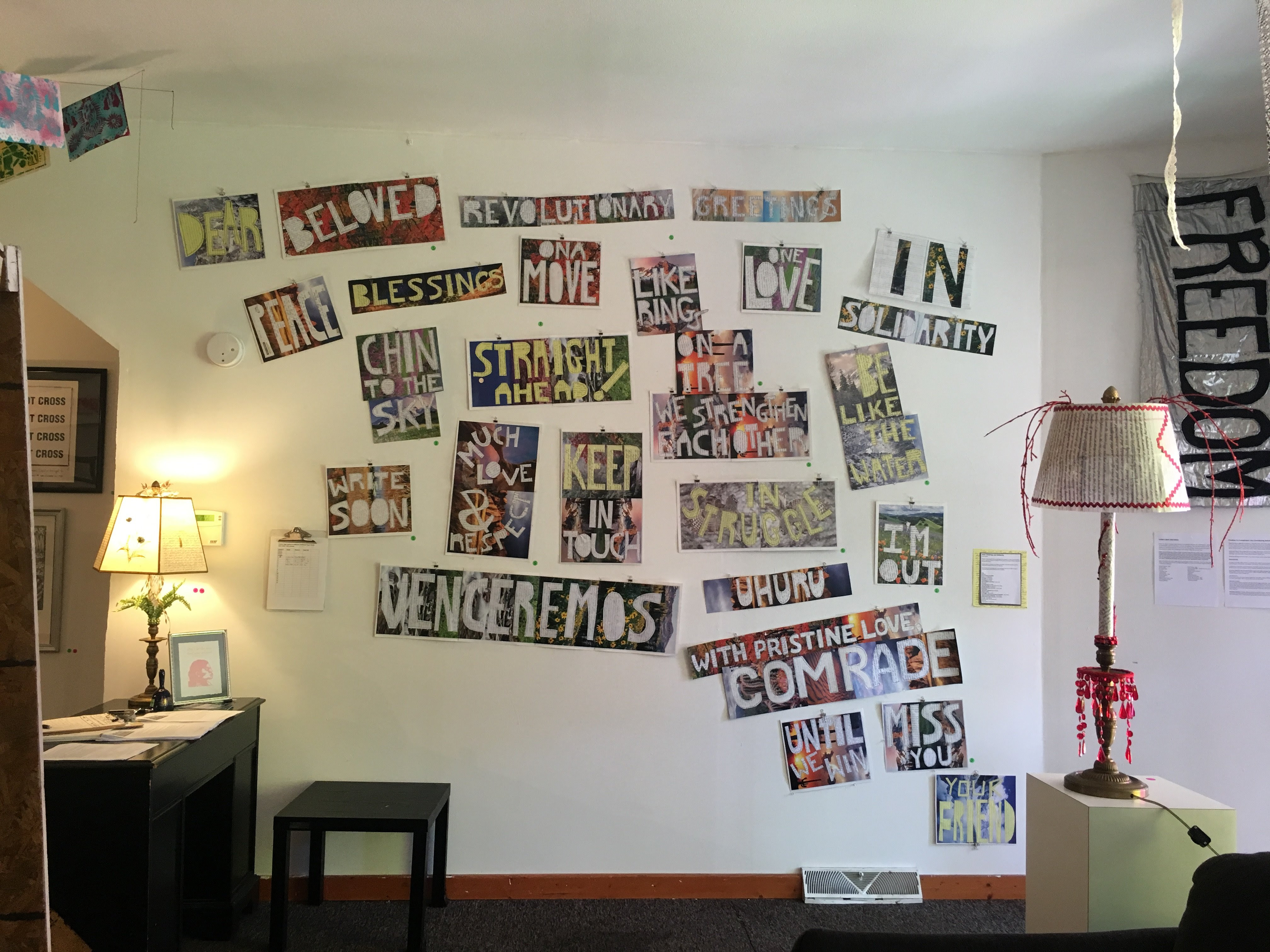
These sewn greetings are made with letters from people in prison and sewn onto old sierra club calendars. The phrases are the sign off greetings from the letters. The two lamps shades are also made from using letters from prisoners. (etta cetera made the sewn greetings and Leslie Stem made the lamps)

Art Gallery as an Organizing Tool

For the 2nd year in a row, Let’s Get Free has facilitated a collaborative art show in effort to raise funds for our basic needs like transportation, stamps, speakers fees and copies. Not only do we get filled up on funds and creative inspiration, we also take full advantage of the space through having weekly gallery hours and 3 events. The opening event and auction saw over 1,000 people come through the doors of Boom Concepts and almost all the art sold raising over $5,000.  Etta Cetera, co-founder of Let’s Get Free and curator of Letters and Liberation, gave two tours to youth groups including, 1Hood Media’s summer interns and the Hazelwood Arts Excursion. One participant wants to help etta curate the show next year and many of the young people said they would donate art to future events. This years art show funded the Let’s Get Free retreat which took place on August 12. Overlooking Edinboro Lake we reflected, assessed and strategized. This years art show also helped to fund two new programs – The Real Deal a support group for returning citizens and Let‘s Get Smart – an initiative to build educational opportunities in prisons across PA.

THANK YOU SO MUCH TO ALL THE ARTISTS WHO DONATED ART, ALL THE VOLUNTEERS WHO SET UP, BROKE DOWN AND HELPED WITH EVENTS, ALL THE PEOPLE WHO BOUGHT ART, ALL THE ATTENDEES WHO SHARED THEIR WISDOM WITH US THROUGHOUT THE MONTH OF JULY AND TO BOOM CONCEPTS.

Below is the newsletter we will be sending to our loved ones on the inside, we send out about 350 newsletters mostly to women serving death by incarceration and our close friends and advisors. Let’s Get Free is:
Devon Cohen, Donna Hill, Alan & Nancy Lewandoski, Sara Coffey, Darlene Williams, Jess Cox, Lauren Stupartiz, Jane Hein, Carol Speaks, Josie Young, Cat Besterman and etta cetera [Lauren, Devon, etta, and Alan pictured on left at retreat.Photo by Nancy]


Get Out the Vote in the Midterm Elections

What can you do? Get out the VOTE in the midterm elections this November! Ask the candidates if they will support the lifer bills and vote for the candidate who will. In District 28 (Allegheny County) there is a very important race. The incumbent, MikeTurzai, is being challenged by Emily Skopov. Let’s Get Free has tried to meet with the incumbent to ask for his support of the lifer bill but he will not schedule a meeting. The incumbent is the speaker of the House so he has great power to appoint committee chairs and wield influence. His head of the house Judiciary committee does not support our cause. Let’s Get Free has met with Emily Skopov and she will support the lifer bill. She is committed to serving the interests of her constituents, not her financial backers. So please support Emily Skopov and other candidates who support reforms leading to redemption. Go to https://ballotpedia.org/Pennsylvania_elections,_2018 to find out who is running in your area.

Just as important as the midterm elections is next year’s election for DA in Allegheny County. Legislators tell us they will vote on the lifer bill as the District Attorneys tell them. Philadelphia County has a new DA who is committed to being smart on crime and reforming the system. All other PA counties need like minded DA’s. In Allegheny County the DA is up for reelection in 2019.  Turahn Jenkins is running against the incumbent. Jenkins has the endorsement of LGF and CADBIwest. What can you do? Please support his campaign anyway you can and especially by telling your friends and family his name.Turahn Jenkins for DA!


If Fetterman wins LT. Governor, hold him to his word


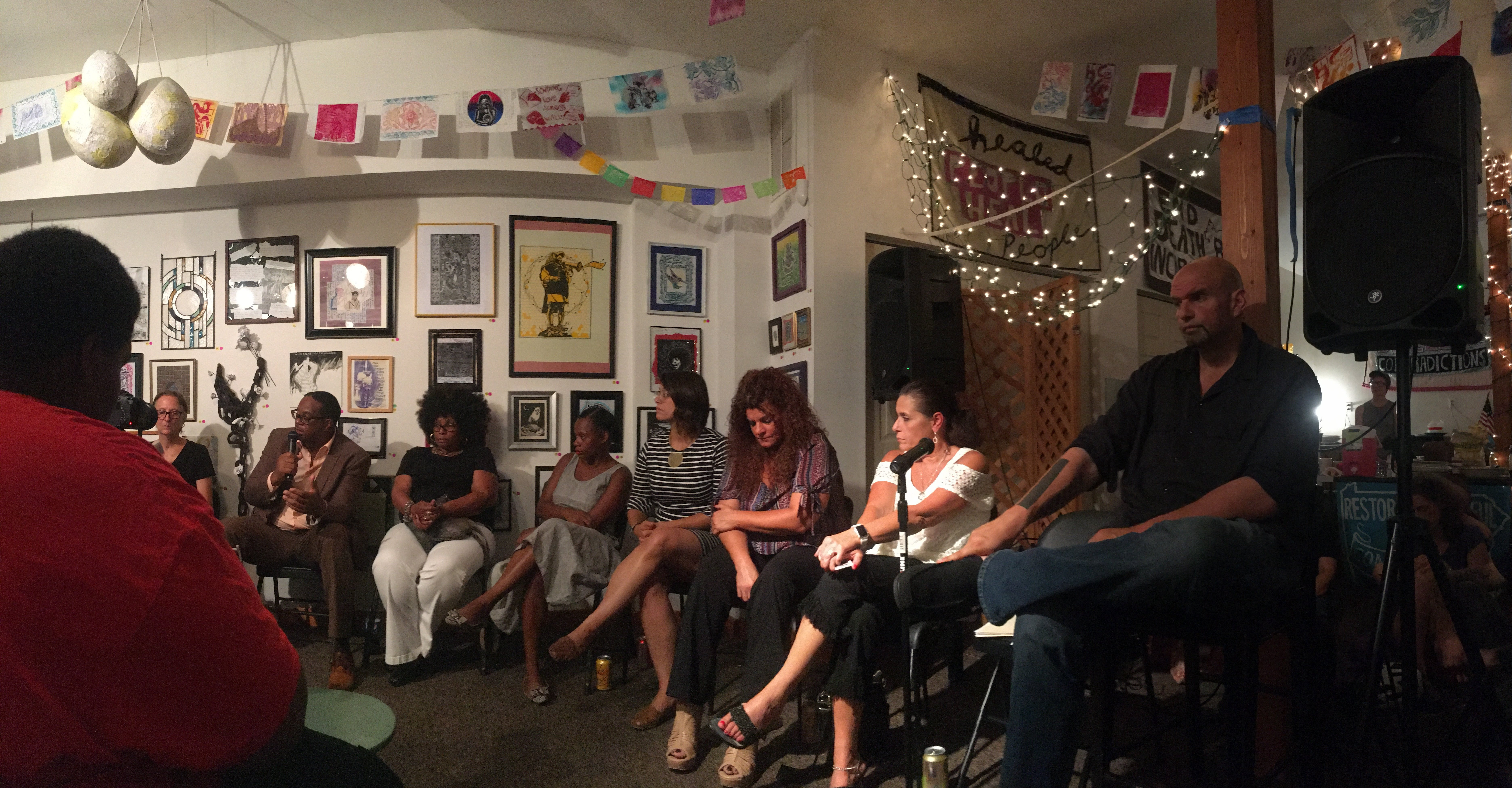
On July 11 2018, Let’s Get Free hosted a Community Dialogue on Pardons and Parole. Panelists included CADBI members Robert Saleem Holbrook, Carol Speaks, Liz Guyer, Marcie Marra and Pittsburgh based politicians: John Fetterman, Ed Gainey, Sara Innamorato, Summer Lee.  (Ed, Sara and Summer have already spoken in support of SB942 and HB135.

During the discussion the Democratic Candidate for Lt. Governor John Fetterman stated the following:

1.) He opposes the Unanimous Vote on the Board of Pardons for Lifers and believes it is a impossible burden for a Lifer.
2.) He supports Judges having Discretion when it comes to sentencing prisoners to Life, which is a tacit support of parole for lifers that we can use.
3.) He said he supports changes to the Board of Pardons
4.) He would consider presumptive parole for prisoners

His statements as well as the whole event were recorded and are on youtube. If elected he should be held accountable to his word.


The Real Deal on ReEntry – From B Block to the Streets
 
Contact: Ricky Olds
Phone: 412-503-2319
Email – realdealpittsburgh@gmail.com
Snailmail – The Let’s Get Free ATTN: THE REAL DEAL 460 Melwood #300 Pittsburgh, PA 15213

What is the Real Deal? The Real Deal is a support group, a discussion group, a problem sharing and a problem-solving group tackling the many issues that face people coming home from prison. The Real Deal is made up of Re-entrants, by Re-entrants and for Re-entrants.

Who is it for? Initially, we are focusing on returning juvenile lifers and longer term returning citizens, however, we foresee quickly expanding to include all formally incarcerated individuals, men as well as women. We also hope to include spouses, children, and family members of returning citizens. Any persons integral to the support and long term success of the returning citizens. We also encourage spouses and family members of those yet to be released to attend. So they might better understand the challenges their loved ones will be facing upon release. This will create a network of support, a network made up entirely of people in the same or similar circumstances. In many cases, a strong network can make all the difference.

Speak it into Existence: Our dream is to build a solid network supporting people coming home.  We hope to create strong lines of communication through the walls sharing our meeting minutes, what we have learned, discovered and created, with those still incarcerated.  Any questions, comments or concerns coming from the inside can be addressed and forwarded at the next meeting with the goal being a smooth and seamless return home for all.  We also plan to develop a Website and eventually simulcast our meetings to those unable to attend physically. We would like a presence on all relevant social media so that the community at large can see who these Re-entrants are and recognize the talent, skills and knowledge represented by many of our returning citizens.

Connect with the Real Deal:  Anyone wanting to participate or knowing of someone who may benefit or have some skill or expertise they may want to share, please contact us at the following: The Real Deal – realdealpittsburgh@gmail.com Ricky Olds – Coordinator – 412-503-2319


Preparing For The Merit Review: Commutation proces
By Ellen Melchiondo, Women Lifers Resume Project

After attending my second merit review session with the Board of Pardons I wanted to find out what factors in determining a decision to vote for or against a public hearing for lifers besides the application’s contents.  Secretary Wetzel interviews each applicant before the merit review and after the staffing. He reads the staffing reports.  Many of us feel that if you get Wetzel’s approval that should at least translate to a yes vote by the DOC’s BOP representative. That is not the case. The battery of tests taken also likely influences their decision.

If Lt. Governor Stack embraces second chances and votes no, how does he get to that judgment?

I learned that once a commutation application is officially filed with the BOP, the application is shared with the committing county’s DA, judge or president judge, victims and possibly the magisterial district. This information is found on page 6 in the Pathways to Pardons booklet.

I am starting to believe that it is necessary that family members and supporters of a commutation applicant reach out and have a conversation with the DA and president judge before the merit review. At that time stress the applicant’s humanity and emphasize the support you are willing to give.

Recently an applicant was denied commutation after a public hearing even with the victim’s family support. The committing county’s DA opposed it. Would it have helped if the victim’s family in this case had a conversation with the DA before the merit review and the public hearing? (I don’t know which member of the BOP voted yes to move on to the public hearing. This information would help to analyze the outcome; three members voted yes for the public hearing.)   On one hand the DA’s MO is to protect the victims. But what happens when the victim’s don’t want the DA’s protection?! Who does the DA work for? Did the DA influence the AG and corrections expert who voted no at the public hearing? Interestingly, the DA and corrections expert are from the same county-Bucks.

This is a very frustrating process especially since we know so much about the nearly non-existence in reoffending by life sentenced people.  The reality of commutation for lifers in PA is dark and complicated but to not apply is not only giving up hope, it keeps the system in place.  By putting your life story out there and facing the consequences it is only then that we on the outside can push to dismantle it thereby improving the outcomes-possible. Always file for reconsideration.

Let’s Get Free continues to share Commutation Kits – A resource for people in PA applying for commutation. The Kit includes a sample application, tips for writing your application and tips for your loved ones to write a support letter for you.


Operation Break Bread Update

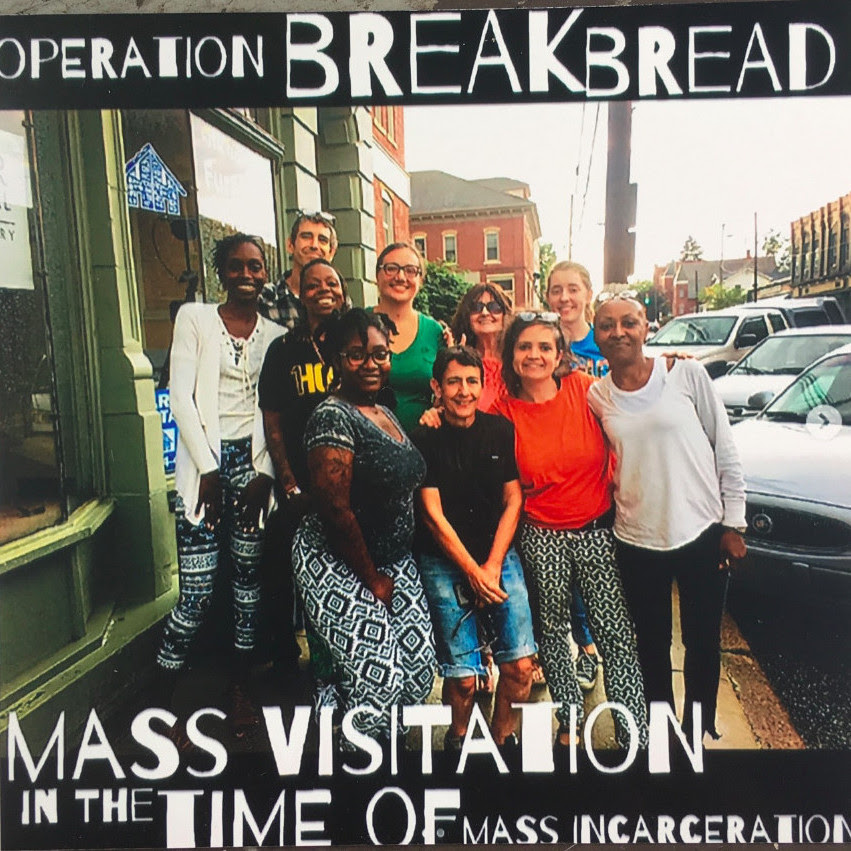
We are celebrating a year of growing connections and building friendships with our project Operation Break Bread, which started the summer of 2017 and grew out of last years art show. With this initiative we’ve organized people in Pittsburgh to visit people serving life at SCI Cambridge Springs, the closest women’s prison to Pittsburgh. For the last year, there have been visits organized at least once every other month, with over 20 people visiting and 20 people receiving visits. We recently organized two prison visit trainings to invite more people to participate and learn the ways to create connections with folks on the inside across the concrete and communication barriers.

If you or someone you know who is serving life at SCI Cambridge Springs would like a visit, reach out to us at: Let’s Get Free 460 Melwood Ave #300 – Pittsburgh, PA 15213 – Please keep in mind we can’t promise a visit and we are very slow to respond but as always we will do our best!


I see her walking out of prison
by Alan Lewondowski

The song is from a daydream I had over breakfast about my friend Marsha Scaggs, currently serving Life Without Parole at SCI Cambridge Springs, PA.

The women sentenced to life at SCI Cambridge Springs and SCI Muncy are some of the best and sweetest people I’ve ever met. They are care giving individuals who act as mentors, teachers and role models to the younger folks with lesser sentences who come through the prison. They have long ago been re-habilitated and transformed into incredible human beings. They do not belong in prison and their being held there until they die constitutes a Human Rights disaster. We make the laws.
Let‘s fix these broken ones.
This song is my vision of Marsha coming home. Let it be soon!

I See Her Walking Out Of Prison
Locked away in a foreign land
Still paying for a mistake from her distant past
Doing way too much time
For tip-toeing over the line once upon a time
She turned into a saint just to survive
She’s a teacher by trade. I know justice is blind
But it doesn’t have to be stupid every time
It’s time!

I see her walking out of prison
I see a door opening
She’s working and waiting
It’s a moment we’ve been hoping to see
Now someone on the inside’s saying
Maybe this means something good’s gonna happen to me
Now she’s on the outside, reaching back, getting sisters free
I see her re-uniting families

I see her walking out of prison
It’s like a day breaking
Or the long-awaited peace
Of night waking
The mother of stone they buried her in is giving birth
Saying “Go on home. You belong to all of Mother Earth”
And now I see her walking
Walking, walking, walking, walking
I see her walking out of prison

I know one day she’ll walk free
From this cage of entropy

I see her walking out of prison

Ghani shares 5 lessons applicable to humanity learned by Geese. He shared this at the end of a workshop entitled “Peace, Forgiveness and Ubuntu” which happened on July 21, 2018 in Pittsburgh, PA as part of the Letters & Liberation Art Show at Boom Concepts.

Categories
News

Article: After “powerful” hearing 3 decades later, inmate is eligible for parole!

We <3 you Ghani, and hope to celebrate your freedom this September! There are so many behind bars who deserve a second chance at parole and commutation. Even after decades of incarceration, people are dreaming of contributing back to society and helping make things right. Support House Bill 135 in the Judiciary Committee so we can see more folks like Ghani get a second chance at parole!
Read more here 

Below are pictures from Ghani’s Community Resentencing which happened on Sunday July 23 in Philadelphia organized by Coalition to Abolish Death by Incarceration (CADBI) and pictures of us the next day, Monday July 24th outside the JV court house during Ghani’s actual appeal hearing.

Categories
News

Latest News from Coalition to Abolish Death by Incarceration (CADBI)

The last weekend of January was full of activity across the nation and in Philly. Trump had just announced the travel ban that Friday evening, and people all over the country were flocking to airports to speak up, sit in, and support Muslim travelers from the seven named countries who were being detained. Philadelphia was no different. Several of the 50 attendees of the state-wide strategy meeting of the Coalition to Abolish Death by Incarceration (CADBI) cut out at lunch to legal observe and participate in the resilient and spirited uprising. This energy infused our meeting space; several signs were hung declaring solidarity with Muslim people and denouncing deportations.

The bulk of the eight-hour strategy meeting was spent divided into break-out groups developing goals for the year. The Membership group strategized around sustaining, supporting, and recruiting new members. Ideas generated from this session included creating a resource sharing tool kit for family members, developing a formal orientation, and having parties to bring people together. A dinner honoring family members of lifers is already on the calendar for March 25th.

The Media group talked tactics on messaging, writing op-ed’s, developing workshops, and creating one-page talking points that would be supportive of different audiences.

Next we had the Statewide Coalition crew and the Legislative crew. There are many overlapping ideas here centering our goal of passing HB 135—the parole expansion for lifers bill, also called the Dawkin’s bill.  We talked about reaching out to the rural communities and outlying counties where our campaign is underrepresented. A power mapping initiative is already underway, and once the priorities are articulated, we can call on our incarcerated comrades to locate people and potential constituents in those regions. In other words, we need lifers from the rural regions to get their families involved so their representatives will listen to us when we say “Liberation In Our Lifetime!”

We plan to host three trips to Harrisburg to build momentum and lobby, as well as a lot of traveling around the state with community dialogues, townhalls, and meetings with lawmakers. This post was reprinted from the Global Network to Free Maroon‘s March Newsletter.

How we gonna bring our people home alive? Gonna Pass HB- 135

Categories
News

Let’s Get Free Our Year in Review

Looking back on this year, Let’s Get Free has done a lot of work, made solid connections, grown in community, and has been supported and built by so many amazing folks. In 2016, we officially launched our Campaign to Restore Meaningful Commutation, hosted a legislator call-in day to begin laying tracks for future commutation reform, lobbied in Harrisburg and held a press conference in support of HB2135 and commutation reform. We sent our first newsletter, organized ongoing support for Juvenile Lifer cases in PA, began fundraising in earnest to be able to realize our goals for mobilizing and organizing across the state, and lobbied again with CADBI on October 18 to end Death By Incarceration.

The last 6 months have felt big, working to ride on the crest of the wave stirred up by our rally and lobbying efforts in June and October, and the introduction of HB2135–legislation for Parole Expansion for Lifers. We have been successfully fostering and growing relationships with PA state representatives who support HB2135, and have begun working with representatives in SW PA to craft a strategic approach to statewide campaigning for this legislation. We had the opportunity to participate in a historic Lifer’s Retreat at SCI Graterford, making incredible connections and community with others in the struggle across the state, and are collaborating to expand a scholarship fund. We hosted a deeply moving listening event with Samantha Broun, who has produced a singularly important radio piece about violence, harm, healing, and commutation. Our statewide collaboration and networking with other justice groups across the state has been growing stronger, and we have successfully started to expand our working group. Building our house up so we can invite more people in to keep on in 2017!

Please download our January 2017 Newsletter

The Campaign to Restore Meaningful Commutation has gathered a Commutation Support Kit. It includes tips from Ellen, a copy of an application that ended up winning freedom for a lifer, and sample letters to write to family and friends to help them support you in this process.

Categories
News

Freedom on the Horizon for Paulette Carrington

paulettePA’s first female serving JLWOP was resentenced!

Reports compiled by Ellen Melchiondo from the Women’s Lifers Resume Project

Ellen Melchiondo writes: The hearing lasted about half an hour.

Before the hearing began, the assistant to lawyer Susan Ricci of the Philadelphia Defenders Association, took the names of the people who came in support of Paulette:  four members of Paulette’s family, two women from The First Unitarian Church of Philadelphia, Pastor Collins and Richard “Tut” Carter of the Church of The Overcomers, Paul Mack, Ellen Melchiondo,Mike Lyons, Yvonne Newkirk and 3 others from CADBI, FFL, PA Prison Society and The Redemption Project, Susan Beard-Nole, wife of Freddie Nole a juvenile lifer, Cecilia Velasquez, sister of Ben who is a lifer and who spent some time at Muncy. (All of the names were submitted to the court for the record and some names were read by Ricci during her presentation.) A card was signed by everyone to be given to Paulette.

Paulette’s family provided her with new clothes to wear. Paulette looked at everyone as she was seated upon entering. Susan Ricci frequently had her arm on Paulette’s back and arm.

The ADA said little, except to verify the plea deal and supported it. 35 to life.  Paulette served 38 years. There was no opposition.

Susan Ricci explained Paulette’s life before the incident and the training, work and programs that Paulette completed while in prison. Paulette spoke as she struggled with tears as she expressed her remorse and wishes to help young people avoid her situation.

The judge, Katheryn Streeter Lewis, read about the crime, the GED and HS Diploma that Paulette achieved. The judge said she was aware that Paulette is the first female juvenile lifer in PA to get this far. The judge expressed her confidence in Paulette’s ability to be successful after prison.She also expressed her desire to see that children like Paulette get the support they need to avoid tragedy and that the system had failed them.

Paulette agreed with all of legal limitations that she pled to. The supporters applauded at the end and Paulette was escorted out by the sheriff, who sat by her the entire time. No hugs allowed.

Paulette will return to SCI Cambridge Springs to work out parole arrangements and within three months she will return to Philadelphia to live in a transitional home for six months before joining family.

From Cecilia Velasquez whose brother Ben is serving LWOP for decades:  As Paulette begin to talk about her crime, she choked back tears as she expressed her remorse for the life she had taken. The audience felt her pain as tears rolled down many in the audience.  I, Cecilia, met Paulette many years ago, over 36 years ago. At that time, she was a young teen even young for her age, yet, there was already a sense of a heavy laden burden from the sentenced she had been given.

Yesterday I met the woman she had become despite all she had experience in those 38 years, the people she had lost, the oblivious suffering and pain written on her face. Paulette had overcome her situation and circumstances to develop, grow, improve herself and help those around her.

As I sat in the audience I couldn’t help feel Peachies’ presence and the ground work with her life!Paulette is truly a testament to all of us on how to live in spite of our Circumstances.  I felt honored to be part of this history making event to change the destiny of juvenile women lifers.  Paulette,  Thank you.

From Susan Beard-Nole whose husband Freddie has been serving JLWOP for 47 years:

It brought great sorrow to hear that Paulette lost her only child to violence. Just a reminder of the harm done to children who are separated from their mothers/fathers due to prison. Despite that sadness, Paulette continued on to help the young women who crossed her path.

From Susan Ricci, Paulette’s attorney at the Defender’s Association of Philadelphia:

I agree that Paulette’s story is a very powerful one and I too thought the court staff and the judge were moved by it.  Of course it is terrible what happened to the deceased in this case, but Paulette was truly a victim in all this as well.  A life sentence was so incredibly unjust.  Judge Lewis has now handled a number of resentencing hearings in juvenile lifer cases but this was the first time I have heard her question out loud who is responsible for all the trauma inflicted on the children who then went on to act out in a way that ended so tragically.  Paulette is such a strong woman.  I am grateful to have been assigned her case so that I got the opportunity to know her.  And I am very thankful you and the others were there to support her.  It meant so much to her.

Categories
News

Report back from Harrisburg Mobilization

The Campaign to Restore Meaningful Commutation Hits the Capitol

DSC_0009
Group with Jason Dawkins and Ed Gainey by Traisaun Leake

On Thursday, June 23, the Campaign to Restore Meaningful Commutation hit the Capitol pushing a 12 point platform that would change regulations and practices of the barely functional commutation process.  About 25 people traveled to Harrisburg from Pittsburgh and 10 more from Philly.  Upon arrival from Pittsburgh a devoted crew raced up to the office of Jason Dawkins, co-author of HB 2135, where he met them with open arms. House Bill 2135 was introduced on June 9, and has the ambition to Expand Parole Eligibility for Life Sentences. This bill would make people eligible for parole after 15 years served, and as Jason said in our press conference, “This bill would abolish life without parole.” Can you believe a State Rep said those words?!

Rep Ed Gainey from Pittsburgh gave a rousing speech at our rally in support of the bill. This is extra powerful because, tragically, his sister was murdered just a month ago. Additional surprise speakers included: Rep Joanna E. McClinton from Philadelphia and Delaware Counties, who was extremely encouraging and really applauded our efforts, and Rep Patty Kim of Dauphin County, who also stepped to the mic, talking about an impactful meeting she had with women at Muncy.

Some of our speakers included Mae Hadley and Donna Pfender, who spoke on behalf of their daughters who are serving life. Lauren Stuparitz spoke from the perspective of a victim – being the survivor of a brutal attack in Pittsburgh – she believes people deserve a second chance.

Reforms to the Commutation process we were pushing included: Rescinding the Unanimous Vote by the Board of Pardons in case of Life Sentences, Video interviews with lifer applicants before merit review hearing, and Written Reason for Denial of lifer commutation applications. And last but not least, HB 2135 Parole Eligibility for Lifers.

We scheduled meetings with legislators we thought could be potential allies, but were impressed with how many of them had visited prisons and met people serving Life. This included Republican Rep Tom Murt from Philadelphia, who deeply cares about veterans, and spoke of a friend of his who is a Vietnam war vet incarcerated since the 70’s. Tom wants to organize a public hearing in the Human services committee about LWOP, relating how LWOP affects the elderly, veterans, and its connections to mental health and addiction.

On the Senate side of things, Art Haywood, Shirley Kitchen and Greenleaf’s offices were encouraging, informative and uplifting.  Liana, the amazing legislative assistant of Mr. Haywood’s staff, said they were interested in aging prisoners, and the idea of having a public hearing was talked about in several meetings from several perspectives. Rep.Vanessa Brown, another ally, had just visited Muncy and saw a lot of elderly women who she thought should be at home with their families. One of our lobby groups randomly met up with Rep. Kevin Schreiber, D-York, who committed to co-sponsoring bill HB 2135 and gave group a tour of the House. What support!

DSC_0080
photo by Traisaun

Anne Gingrich Cornick, the legal advisor for the Board of Pardons, was present in the Governor’s meeting. Ann read our whole platform in front of us and said that most of our points on our platform would require constitutional amendments. Constitutional Amendments require a 2/3’s majority vote – they need to pass through the House and Senate twice before being put to referendum – a public vote. All regulatory changes for the Board of Pardons must go through the Independent Regulatory Review Commission. (IRCC)

We learned the Victim’s Advocate position of the Board of Pardons was filled by a Pittsburgh resident named Marsha Grayson. For those of you in Pittsburgh, it is her family that started the Jeron X. Grayson Community Center in the Hill district. Senator Greenleaf’s aid told us she is appropriate for the position not only because she has the victim’s perspective, having lost her son, but that also, coming from the Black community, she understands the impact of incarceration on families and neighborhoods and seems to embrace many perspectives.

One official advised that our biggest obstacle was the District Attorney’s Lobby. It was said they have great authority and do not stand with us.

And so, where does this leave us? There is a to do list a mile long including writing op eds, meeting with lawmakers locally, coordinating statewide efforts to push HB 2135 and commutation reform, following up about public hearings, and building alliances with victims rights organizations. Leaving the Capitol we felt very excited and hopeful.  We also felt the realness of the difficulty that lay before us. There is a long hard road ahead.

DSC_0130

Categories
News

If the Risk Is Low, Let Them Go

Farid Cover Photo 1CMYKweb
Farid Mujahid, co-founder of Release Aging People from Prison (RAPP) Photo by Dave Sanders

How a man who served 33 years on a 15-to-life sentence is pushing New York’s intransigent parole board to release violent offenders who have aged out of crime, the fastest growing segment of the prison population.

Published in NYC Indypendent By Renee Feltz June 29, 2016  Issue # 215

Back in 1978, Mujahid Farid had already decided to turn his life around when he entered the New York prison system to begin a 15-year-to-life sentence for attempted murder of an NYPD officer.

Held in Rikers Island while his trial was pending, Farid studied for — and passed — a high school equivalency exam. Over the next decade and a half “behind the walls” he earned four college degrees, including a master’s in sociology from SUNY New Paltz and another in ministry from New York Theological Seminary.

In the late 1980s he helped establish an HIV/AIDS peer education project that grew into the acclaimed program known as PACE, Prisoners for AIDS Counseling and Education, and began teaching sociology courses to people seeking their alcohol and substance Abuse counseling certification.

By 1993, Farid had served his minimum sentence and was eligible for a hearing before the New York Parole Board. Given how hard he had worked to redeem himself, no one could blame him for being optimistic that they would agree to his release.

Instead, they spent five minutes asking him curt questions focused entirely on his original offense. Then the hearing ended.

“Not one bit of my progress and rehabilitative efforts mattered,” Farid recalls. “I was denied parole because of something that was immutable, that could never change.”

He was denied parole “again and again,” until his 10th attempt in 2011, when he was 61 years old.

“Over the years, the process breaks a lot of people down,” he says. “Many take it personally. I realized it was common parole board practice.”

•   •   •

Now aged 66, Farid recently met me at 8:30 am on a Monday morning at his office in Harlem, where he had been at work since the building opened hours earlier. In a firm and encouraging tone, tinged with polite impatience, he explained how upon his release from prison, he couldn’t forget “the broken parole system I had dealt with” and the men he left behind.

New York’s prison population has greyed rapidly in the last 15 years. Even as the number of people locked up fell by 23 percent, those aged 50 or older ballooned nearly 85 percent, reaching 9,200 people. This echoes a national trend of the elderly being the fastest growing part of the prison population. By 2030, they will number 400,000, or nearly one-third of the U.S. prison population.

While 50 may not seem that old, most medical experts agree that incarcerated people age much faster than those on the outside. They suffer higher rates of chronic illness and conditions related to drug and alcohol abuse, such as liver disease and hepatitis. Data from the New York Department of Corrections show prisoners aged 51 to 60 have the highest rate of mortality due to illness of any age group behind bars.

Most of these older prisoners are serving long sentences for committing violent crimes. Their first hurdle to release is a parole board that refuses to provide them with fair and objective hearings because of their original offense, even though they have not posed a threat to society in years.

“The parole board is co-opted by the punishment paradigm,” Farid says. “Even though the elderly have the lowest of risk of committing a crime upon release, they are being denied similarly to everyone else.”

Meanwhile, this public health and humanitarian crisis has gone unaddressed despite a renewed interest in criminal justice reform that has focused narrowly on nonviolent offenders.

So in 2013, Farid founded a group called Release Aging People in Prison, or RAPP.

“We realized we had to change the narrative from talking about long termers and lifers — which people in the community couldn’t really connect with — to talking about the elderly,” he says.

RAPP’s slogan—- “If the Risk is Low, Let Them Go” — draws on the New York Department of Corrections and Community Supervision’s own data.

According to the state’s most recently available report on recidivism by age, those released after the age of 65 return for new commitment at a rate of just 1 percent, compared to a 40-60 percent return rate for the general prison population

Farid Mujahid at a meeting of Release Aging People from Prison (RAPP). Photo: Dave Sanders

•   •   •

In 2011, the same year Farid was released, New York actually passed a law that requires the parole board to adopt a more forward-looking approach when deciding whether to release someone. Tacked onto the budget bill as an amendment, it instructed the board to “establish written guidelines” that include rational standards that measure a potential parolee’s current risk to society, in addition to noting their initial crime.

New York is one of at least 23 other states that measures those standards with a risk and assessment tool called COMPAS, which has proven to be more accurate than human intuition in predicting the likelihood that a prisoner will break the law again if freed.

“Even though COMPAS isn’t perfect, it gives us an advantage,” Farid notes, “because the aging population we are focused on scores low risk.”

It seemed like a victory. But even after COMPAS was adopted, the parole board waited until December of 2014 to issue formal rules on how to use the tool in its decisions. Afterwards, most of its denials remained focused on the criminal history of potential parolees.

This was the case for Dempsey Hawkins, who had been denied parole since he became eligible in 2000. Hawkins murdered his teenage girlfriend in 1976 when he was 16 years old. He had spent his entire adult life in prison and made extensive efforts to rehabilitate in the other areas the parole board would consider: he completed counseling programs and educational courses and had an excellent behavior record.

But in 2002, the board said Hawkins had “demonstrated no remorse nor compassion for her family,” even though he had written a long letter of apology to the family taking full responsibility for his crime with an extended discussion of shame, remorse and consideration of the family’s pain and suffering.

Then in 2004, all but two words of the board’s written decision were about the teenager who committed the crime, not the man before them: “We note your positive programming but find more compelling your total disregard for human life.”

During the hearing, Hawkins asked if there was anything he could do to “increase my chances for my next hearing.” A commissioner responded, “You’ve done many of the right things. You’ve continued to program well, and stayed out of trouble. Clearly, there’s no, you know, 14-year-old girls here to kill in prison, so we have to consider the crime.”

After the 2011 reform, Hawkins continued to be denied parole. In 2012, the board refused his release but noted that “[c]onsideration has been given to the assessment of your risks and needs for success on parole, any program completion, and any satisfactory behavior.”

In 2014, board members spent most of his brief hearing asking about the crime he had committed more than 35 years earlier and denied him again.

•   •   •

At this point, Farid’s legal instincts kicked in from his days as a jailhouse lawyer.

“I always knew the parole board was contemptuous,” he recalls.

He suspected board members were now violating state law by failing to consider all factors in a person’s record when deciding whether or not to release them. So he began advising prisoners to file what is called an “Article 78” with the state Supreme Court, which is basically a request for a judge to review a decision made by a New York State agency.

Some judges responded positively and ordered the board to hold a new hearing — called a de novo hearing. Farid realized the parole board would likely issue similar denials. But this would allow a prisoner to then file a contempt of court motion.

“It is not common, especially for someone behind the walls, to get a contempt order in their favor against government authorities,” Farid says. “But the dynamics at play now are that the courts feel they are being disrespected by the parole board.”

“One of the real positive things about a contempt petition is it allows the person to escape an onerous process called exhaustion,” he adds, pausing. “I don’t want to lose you on this.”

Before a prisoner can even ask a court to review the parole board’s decision, they have to complete every other means of appeal. While this process can take as long as a year, he notes, “a judge can review a contempt petition within a month.”

In May of 2015, Judge Sandra Sciortino issued the first contempt of court decision for the parole board’s “failure to have complied” with her order to give a prisoner named Michael Cassidy a de novo hearing “consistent with the law.”

Cassidy was convicted in 1984 of killing his girlfriend and had covered up the murder until her body was discovered. Over the past three decades in prison he had worked hard to redeem himself, and his favorable COMPAS ratings predicted a low risk for violence, re-arrest, absconding or criminal involvement. But after his new hearing, the board again said his release “would be incompatible with the welfare of society and would so deprecate the serious nature of the crime as to undermine respect for the law.”

Judge Sciortino responded that while “the Parole Board retains substantial discretion, and need not enunciate every factor considered, a denial that focused almost exclusively on the inmate’s crime while failing to take into account other relevant statutory factors, or merely giving them a ‘passing mention’ [is] inadequate, arbitrary and capricious.”

The state appealed. Then about a year later, a second judge held the board in contempt. This time the case involved John Mackenzie, an older prisoner who sought Farid’s advice after reading instructions in a packet distributed by RAPP that includes boilerplate samples of how to file a contempt motion.

“It’s not a lot of paperwork,” he says. “I explain some of the complications a person may encounter so they don’t get summarily dismissed.”

Mackenzie’s motion succeeded.

“It is undisputed that it is unlawful for the parole board to deny parole solely on the basis of the underlying conviction,” an exasperated New York Supreme Court Judge Maria Rosa wrote in her May 24 response to the board’s denial of parole to Mackenzie. “Yet the court can reach no other conclusion but that this is exactly what the parole board did in this case.”

MacKenzie was convicted of murdering a Long Island police officer in 1975, and went on to turn his life around, earning degrees and even establishing a victims impact program. The board has denied him parole eight times since he became eligible in 2000. He is now 69 years old.

“This petitioner has a perfect institutional record for the past 35 years,” Judge Rosa wrote in her order, as she demanded to know: “If parole isn’t granted to this petitioner, when and under what circumstances would it be granted?”

She ordered the state to pay a $500-per-day fine for each day it delayed giving him another de novo hearing. Again, the state appealed.

In June a higher court dealt reformers a setback when it reversed the Cassidy decision. It said the board had recognized factors other than his original crime when it noted he “had serious alcohol problems since he was a teenager,” and concluding he had “a high probability of a return to substance abuse upon his reentry into society” even though he had been sober since 1997.

Cassidy’s lawyer Alan Lewis plans to ask the Court of Appeals to reinstate the lower court’s contempt finding.

“Every litigant has an obligation to abide by a court’s order, government agencies included,” Lewis told The Indypendent.

He praised RAPPs work on similar cases, saying, “It raises awareness of the plight of aging inmates and the injustices sometimes suffered by them.”

“Judges are starting to realize there is this huge problem,” agrees MacKenzie’s lawyer, Kathy Manley. She says other attorneys have sought her advice and are filing additional contempt motions.

•   •   •

As these contempt cases wind through the legal system, no judge has taken the next step to override the parole board and release a prisoner who has been denied a fair hearing, out of deference to separation of powers. But Manley notes this concept can be applied in another way.

“If the original judge sentences a person to 30-years-to-life, then once they reach the minimum point there is an expectation they should be released if they’ve done well,” Manley explains. “But in my client’s case the judge said the board is applying its own penal philosophy.”

The former chair of the state’s parole board, Edward Hammock, made a similar point in an essay titled, “A Perspective on Some Procedures That Unfairly Delay Prisoner Release.”

“Some of these determinations fly in the face of judicial sentencing and sentences that flow from plea agreements between the court, counsel for the defendant, and the prosecutor,” Hammock observed.

Ultimately, the parole board falls under the authority of the executive branch. Its members are appointed by the governor for 6-year terms. But beyond backing the reform in 2011, Governor Andrew Cuomo has done little to address the problem, and cut the board down from 19 to 14 members during his first year in office and appointed as its chair Tina Stanford, former Director of the state’s Office of Victim Services. She has been Chairwoman of the Crime Victims Board since 2007 and before that was an Assistant District Attorney and prosecutor.

Advocates note New York Attorney General Eric Schneiderman’s office could also decline to file appeals as it represents the board in the contempt of court cases. RAPP is currently approaching state lawmakers to ask them to request that Schneiderman issue an advisory to the board in response to the contempt rulings.

Meanwhile these lawmakers continue to consider additional legislative reform, such as the SAFE Parole Act, which would require parole hearings to take place in person instead of via video stream. It would also record the hearings, which are currently closed to the public. But this is the second year it failed to reach a vote.

•   •   •

As the legislature’s 2016 session ends and advocates wait to hear from the attorney general whether he plans to reign in the state’s parole board, RAPP continues its community outreach. When the group’s older members meet with policy makers and the public, their very presence helps give a face to elders who are still behind bars and could be included in the push to end mass incarceration.

At a recent RAPP meeting, 71-year-old Abdul Rahman, who served 45 years in prison, apologized for being late, noting he was suffering from a cold that had “slowed me down.” At the same time, he pulled out a stack of business cards he collected after speaking to advocates for the elderly in Brooklyn.

“Many of them approached me afterwards with great interest,” he said.

The meeting was a mix of people over age 60 who had been released from prison in recent years or had loved ones still inside, and interns in their twenties. One asked for advice on discussing the needs of elders during an upcoming exchange with the city’s Department for the Aging or DFTA.

“They should be ready for more people getting out than before,” Farid responded.

“Emphasize their post-prison potential and the contributions they can make to society,” added Laura Whitehorn. “People should be judged on who they are now.”

Whitehorn spent 14 years behind bars for a conspiracy to blow up symbols of domestic racism and U.S. foreign policy, and has helped ensure aging political prisoners and their analysis are included in RAPP’s efforts.

This comes across in the lineup of a July 9 event RAPP is hosting with the Senior Citizen & Health Committee of Community Board 12 in Queens, an area that is home to 10 senior centers and where many former inmates are being released. The event includes a workshop titled “Breaking the Cycle of Permanent Punishment,” and one of the speakers is Sekou Odinga, a former member of the Black Liberation Army who spent 33 years in federal and state custody.

“We incorporate the political prisoner issue in our work because we are dealing with the punishment paradigm as the root of what we have to get at,” Farid notes.

In early June, a former Black Panther locked up on charges related to his activities more than three decades ago was denied parole, and another lost his Article 78 challenge: Robert Seth Hayes and Maliki Shakur Latine, who both have at exemplary records, and COMPAS scores that show them to be at low risk of reoffending. Hayes suffers from Hepatitis C and Type II diabetes.

“These are the people who I consider to have been the the canaries in the coal mine,” Farid says. “I don’t think we’re going to really see anything substantive take place unless we see it happen with them.”

It is another example of how RAPP is making sure that no one is left behind.

“It’s not about getting handrails in the prisons,” Farid says of RAPP’s strategy. “It’s about getting people out.”

Then he turns to answer the phone call of a prisoner who says he’s been denied parole, again.


RAPP EVENT on JULY 9

Release Aging People from Prison presents speakers and workshops on Saturday, July 9 from 9-3pm at the Queens Educational Opportunity Center, located at 158-29 Archer Avenue. The theme will be “Elders in Prison: Bringing Them Home & Rebuilding Our Communities.” Details: RAPPcampaign.com


Paroled in a Wheelchair

Expenses from medical and geriatric care for elderly prisoners mean they cost two to four times as much as others. But there is a human cost to delaying their release as well. 

In May, RAPP member Mohaman Koti died just two months after he was released to a nursing home in Staten Island. His birth certificate says he was born in 1928, though his mother insisted the year was 1926. 

“We’ve got too many old people in wheelchairs like I am locked up,” Koti said just weeks before he died.

He was convicted in 1978 of attempted murder of an NYPD officer who he said “tried to shake me down for money and I wouldn’t give it to him, so we got to fighting.” The officer recovered, and Koti was offered a plea deal of seven and a half years. He insisted on a trial, and got 25 years to life. 

In the decades that followed, Koti gained respect from both inmates and guards for counseling young men who found themselves sent upstate to some of the most violent prisons in the country. He became eligible for parole in 2003, but like so many others, he got the usual denials. 

When he appeared before the board for a sixth time in 2013, he was so hard of hearing that commissioners had to keep repeating their questions to him. By then he was also suffering from several long-term illnesses. But the board decided he was still at risk of committing another crime, citing the nature of his offense.

After a judge ruled the denials were irrational, he was given a new hearing, and commissioners granted Koti parole in September 2014. But he was then ordered to serve an additional year in prison at a federal medical center in North Carolina because of a pending charge from the time of his arrest nearly four decades ago.

On March 16 of this year Koti was finally released. It was a pyrrhic victory. 

“The kind of life Koti lived when he got out — confined to a nursing home because he was not able to care for himself — shows that it was ludicrous to think he would have posed a threat to society all these years,” said his longtime lawyer, Susan Tipograph.

— Renée Feltz


The Indypendent is a monthly New York City-based newspaper and website. Subscribe to our print edition here. You can make a donation or become a monthly sustainer here.

Categories
News

Photos and Video from June 23 Lobby Day

Thank you to all who made our Lobby day for Commutation Reform so successful! All the lawmakers who jumped into our press conference!  Harmony, Traisaun and Jeron of the Hazelwood Youth Media Justice Program for taking photos. Amazing participants from Action United, New Voices Pittsburgh, The Alliance for Police Accountability, Fight for Lifers West and East, The Women Lifer’s Resume Project, The Human Rights Coalition, and POORLAW. Thank you so much for spending your whole day with us. Your participation uplifts spirits, breathes encouragement into our issue and not to mention taking a whole day to throw down for justice and healing for people with life sentences. Big Ups to everyone who chipped into our go-fund me! Also, Nichole Faina and Michelle Soto for making us lunch and ice tea. More detailed information coming soon. If you click the photo below the video you will enter a slide show.